

Glass Reinforced Plastic (GRP), also known as fibreglass, has become a trusted material across many industrial and commercial sectors. Combining high-strength glass fibres with durable resin, GRP offers a practical alternative to traditional materials such as steel, timber, and aluminium, particularly in environments where durability and low maintenance are essential.
Another reason businesses choose GRP is its versatility. Whether the requirement is to improve slip resistance, protect stairways, create durable walkways, or enhance accessibility, there is a GRP solution designed for the task. Products such as anti-slip decking strips, stair nosing covers, GRP flooring sheets, GRP grating, and surface-mounted tactile paving all serve different purposes while benefiting from the same durable composite construction.
If you're exploring GRP solutions for an industrial, commercial, or public-sector project, you can browse the available range on Zalwan Ltd to find products suited to a variety of applications.
The Practical Benefits of GRP for Commercial Projects
GRP products are widely used because they combine strength, durability, and practicality in a lightweight material. Whether installed in industrial facilities, commercial buildings, or public spaces, they are designed to perform reliably in demanding environments with minimal upkeep. Some of the main benefits include:
- Excellent corrosion resistance: Unlike untreated steel, GRP does not rust when exposed to moisture, many chemicals or coastal conditions. This makes it a suitable option for water treatment plants, marine environments, factories and outdoor walkways where corrosion can reduce the lifespan of traditional materials.
- High strength with low weight: GRP offers a strong strength-to-weight ratio, making it easier to handle than many metal alternatives. Its lower weight can also simplify transport and installation while still providing dependable performance across a wide range of applications.
- Low maintenance requirements: GRP usually needs less ongoing care than materials that require regular painting, sealing, or corrosion treatment. Routine cleaning and periodic inspections are generally enough to help keep it performing as intended.
- Improved slip resistance: Many GRP products are available with textured or anti-slip surfaces that improve grip in wet, busy, or exposed areas. This makes them a practical choice for stairs, ramps, platforms, walkways and access routes.
- Long-term value: GRP is often chosen for projects where durability and reduced maintenance are important. Its resistance to corrosion, moisture, and general wear can help lower long-term upkeep and replacement demands.
These advantages make GRP a practical option for buyers looking for durable products that can perform well in challenging industrial and commercial environments.
Types of GRP Products for Industrial and Commercial Use
GRP products are available in different formats to address specific access, flooring, safety, and accessibility requirements. Choosing the right product depends on the existing surface, location, level of foot traffic, and the conditions it will face.
1. Anti-Slip Decking Strips
Anti-slip decking strips are designed to add grip to existing timber, concrete, or metal surfaces. They can be particularly useful on outdoor decking, walkways, ramps, bridges, and access routes where rain, dirt, or regular use may make the surface slippery. Because the strips are fitted over selected areas rather than replacing the entire surface, they can offer a practical way to improve pedestrian safety while retaining the existing structure.
For areas where improved surface grip is required, anti-slip decking strips may provide a straightforward solution.
2. Stair Nosing Covers
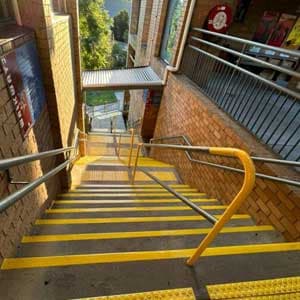
Stair nosing covers fit over the front edge of existing steps, helping improve grip and making the stair edge easier to identify. They are commonly considered for industrial stairways, commercial entrances, external steps, fire exits and other frequently used access points. The right stair nosing will depend on the step material, width, environment and expected level of use. Colour contrast may also be important in locations where clearer stair-edge visibility supports safer access.
Browse the relevant stair nosing covers when upgrading worn, slippery or difficult-to-see step edges.
3. GRP Flooring Flat Sheets
GRP flooring flat sheets provide broader anti-slip coverage across walkways, ramps, platforms, loading areas and working surfaces. They can be fitted over suitable existing substrates where a durable, textured surface is needed. Flat sheets are useful when individual strips would not provide enough coverage. Before choosing a sheet, consider its dimensions, thickness, surface finish, and how it will be cut and fixed to the substrate.
For larger surface areas, GRP flooring flat sheets can help create a more consistent anti-slip walking surface.
4. GRP Grating
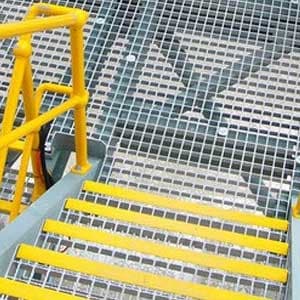
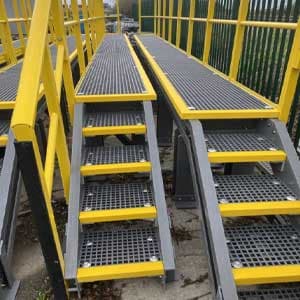
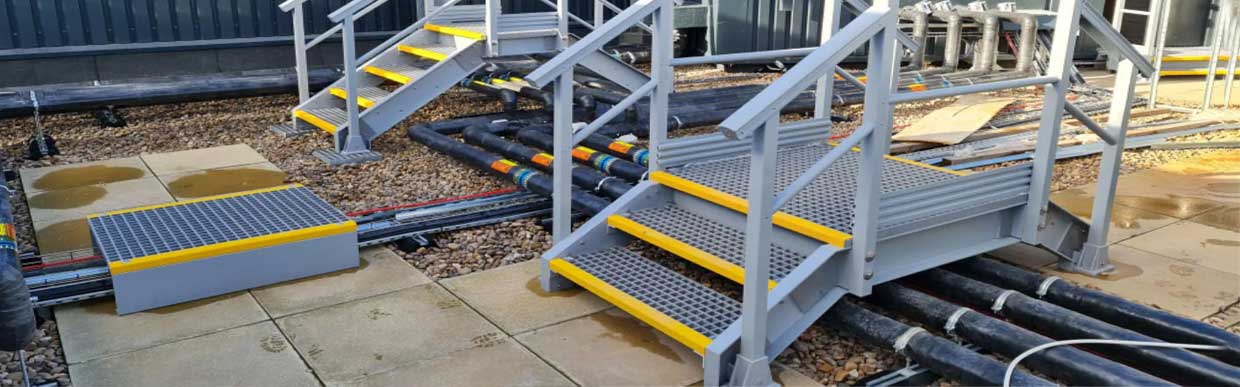
GRP grating is used for applications such as raised walkways, platforms, access routes, drainage areas, and industrial flooring. Its open-grid design can allow liquids and debris to pass through rather than collect on the walking surface. It may be considered for wet, corrosive, or exposed environments where traditional metal flooring could require more frequent maintenance.
The GRP grating range is worth considering for platforms and walkways that require drainage, durability, and dependable access.
5. Surface-Mounted Tactile Paving
Surface-mounted tactile paving is designed to provide a detectable underfoot warning or guidance feature in public and commercial spaces. It may be installed around pedestrian crossings, transport environments, entrances, steps, and other areas where accessible navigation is important.
For suitable accessibility upgrades, surface-mounted tactile paving can be added to prepared existing surfaces without removing the full substrate.
6. GRP Stair Tread Covers
GRP Stair Tread Covers are designed to fit over the entire surface of existing steps, creating a durable, slip-resistant walking surface without the need to replace the original staircase. They are commonly used where worn, smooth, or damaged steps require a practical safety upgrade.
For projects requiring complete step coverage rather than just edge protection, GRP stair tread covers provide a durable and practical solution.
GRP Compared with Steel, Timber, and Aluminium
The table below highlights some of the main differences.
| Feature | GRP | Steel | Timber | Aluminium |
|---|---|---|---|---|
| Corrosion Resistance | Excellent resistance to rust and moisture | Can rust without protective treatment | May rot, warp or decay if not maintained | Naturally corrosion-resistant but can corrode in certain environments |
| Weight | Lightweight | Heavy | Moderate | Lightweight |
| Maintenance | Low maintenance | Regular inspection and protective coatings may be required | Requires ongoing treatment and sealing | Generally low maintenance |
| Slip Resistance | Available with anti-slip surfaces | Usually requires additional anti-slip treatment | Depends on finish and condition | Often requires anti-slip additions |
| Installation | Easier handling due to lower weight | May require lifting equipment | Relatively straightforward, depending on the application | Easier to handle than steel |
| Outdoor Performance | Performs well in harsh weather and damp conditions | Can deteriorate if corrosion protection fails | Weather exposure can reduce lifespan | Performs well in many outdoor environments |
It's important to remember that every project has different structural, environmental, and regulatory requirements. The most suitable material will depend on the intended application, expected loading, installation conditions, and project specifications.
Installation and Maintenance Considerations
Proper installation and routine maintenance can help GRP products deliver reliable performance throughout their service life. Although specific installation methods vary depending on the product and application, planning can help achieve a safer and more durable result.
i) Prepare the Surface
Before installation, ensure the existing surface is clean, dry, and structurally sound. Remove loose debris, dirt, grease or damaged material that could affect the product's fit or fixing. A well-prepared surface helps provide better stability and long-term performance.
ii) Choose the Appropriate Fixing Method
Different GRP products may require different installation methods depending on the substrate and application. Mechanical fixings, adhesives or a combination of both may be suitable in certain situations. Always follow the manufacturer's installation guidance and ensure the chosen fixing method is compatible with both the product and the installation surface.
iii) Measure Carefully Before Cutting
Where products need to be trimmed to size, accurate measurements are essential. Mark cuts lines clearly and uses the appropriate tools recommended for GRP materials. Taking time to measure correctly can help minimise waste and improve the overall finish.
iv) Carry Out Routine Inspections
Although GRP products are known for their durability and low maintenance requirements, periodic inspections remain good practice. Check for signs of wear, loose fixings, or accidental damage, particularly in high-traffic or safety-critical areas. Addressing minor issues early can help maintain safe access and extend the product's service life.
Common Questions About GRP Products
Q: What does GRP stand for?
GRP stands for Glass Reinforced Plastic. It is also commonly known as fibreglass. The material combines glass fibres with resin to create a strong, lightweight composite used in a wide range of industrial, commercial and public-access applications.
Q: How does GRP compare with steel?
GRP is generally lighter than steel and does not rust. It may also require less ongoing maintenance in wet or corrosive environments. Steel can be better suited to certain structural applications, so the right choice depends on load requirements, site conditions, and project specifications.
Q: What should buyers check before ordering surface-mounted tactile paving?
Buyers should review the intended location, layout, colour contrast, dimensions, and substrate condition. Accessibility requirements can vary by site and application, so professional or project-specific guidance may also be necessary.
Find the Right GRP Solution for Your Site
GRP products can offer a practical combination of strength, durability, low maintenance, and resistance to demanding conditions. The best choice depends on how and where the product will be used, as well as the level of grip, coverage, accessibility, or structural support required. Anti-slip decking strips can improve traction on existing surfaces, while stair nosing covers help make step edges safer and easier to identify.
GRP flooring flat sheets provide wider anti-slip coverage, GRP grating supports walkways and platforms, and surface-mounted tactile paving can help improve accessible navigation in public areas. Before ordering, review the site conditions, measurements, surface type, installation method, and expected level of use.
To compare suitable options for your project, browse the GRP products range available from Zalwan Ltd.